
अखण्ड भारत · The civilizational map
From Hinglaj to Java, Pashupatinath to Angkor —
dharma never carried a passport.
Akhand Bharat is a civilizational fact long before it is a political slogan. Sanskrit reached Java. Śiva sanctuaries stand in Vietnam. A Śakti Pīṭha is venerated in Balochistan. This page is a map — of stone, language, and continuity.
उत्तरं यत्समुद्रस्य हिमाद्रेश्चैव दक्षिणम् ।
वर्षं तद् भारतं नाम भारती यत्र सन्ततिः ॥
"The land north of the ocean and south of the Himavān is called Bhāratam;
there dwell the children of Bharata." — Viṣṇu Purāṇa, 2.3.1
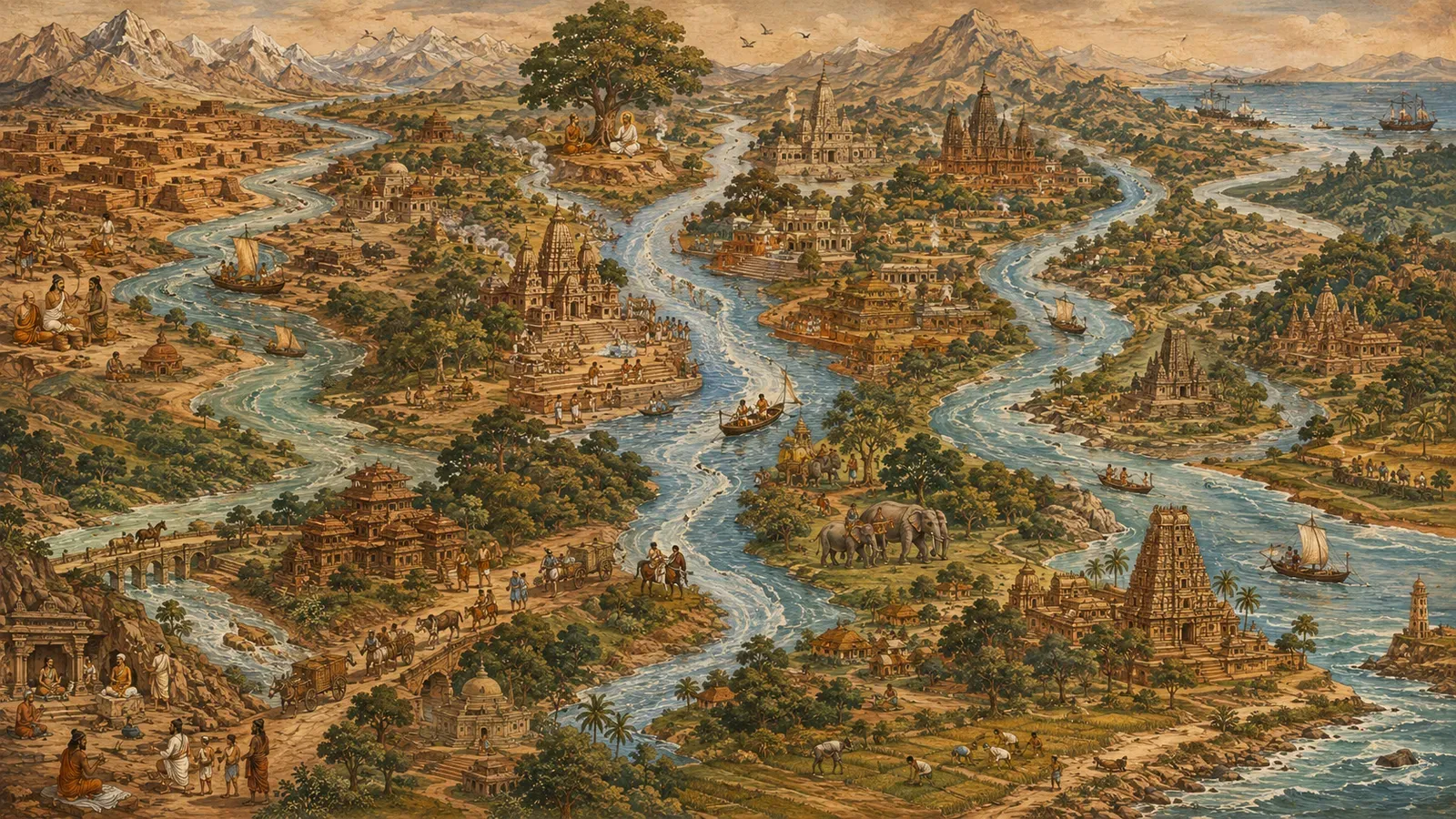
Bhāratavarṣa in classical geography भारतवर्ष
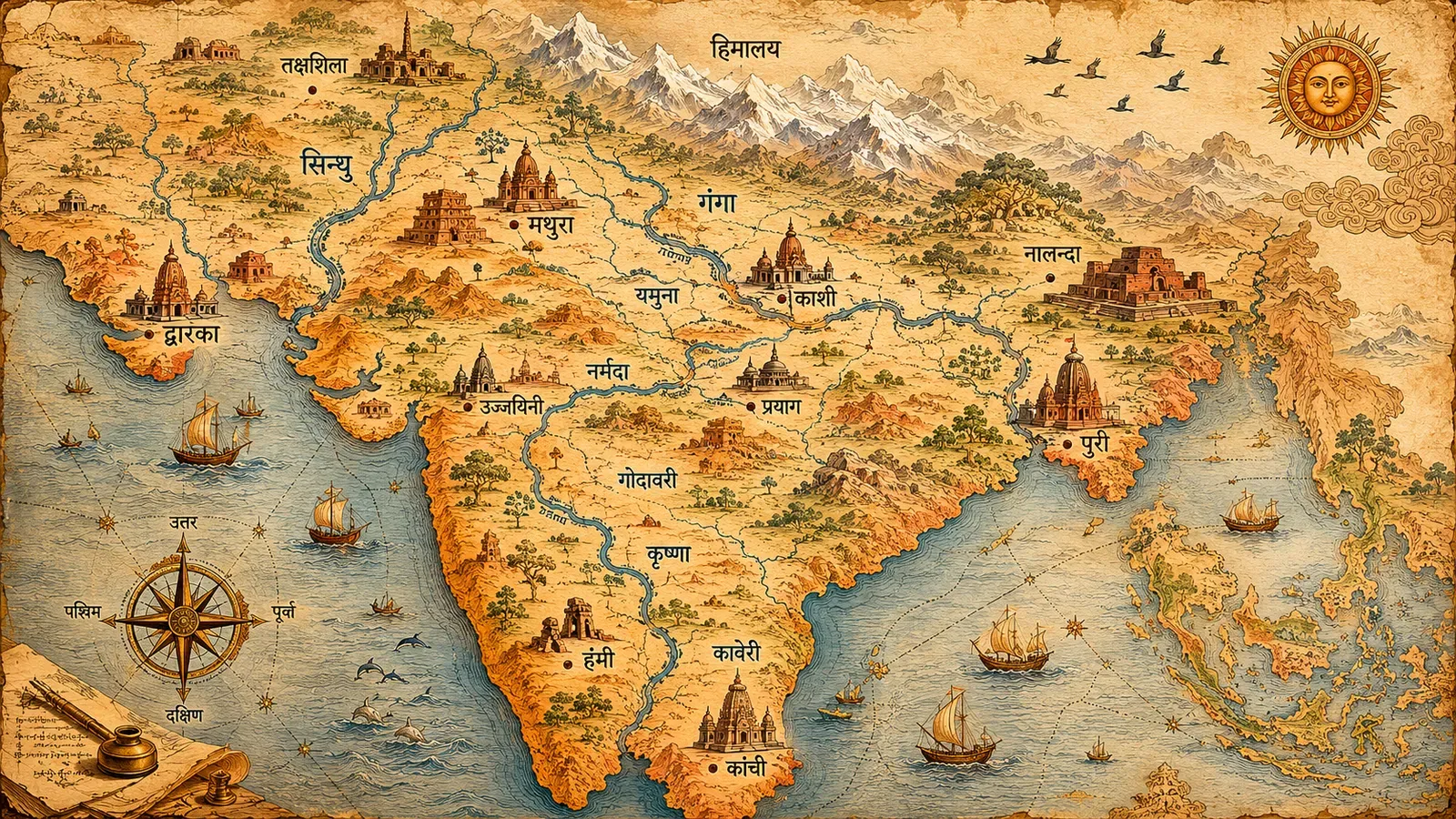
The classical Sanskrit texts — Viṣṇu Purāṇa, Bhāgavata, Mahābhārata's Bhīṣma Parva, the Manusmṛti's 2.21–24 — describe Bhāratavarṣa not as a modern political state but as a civilizational unit bounded by the Himavān in the north and the three oceans in the south. Within it lay nava-dvīpāḥ — nine sub-regions — one of which was Bhārata-khaṇḍa proper.
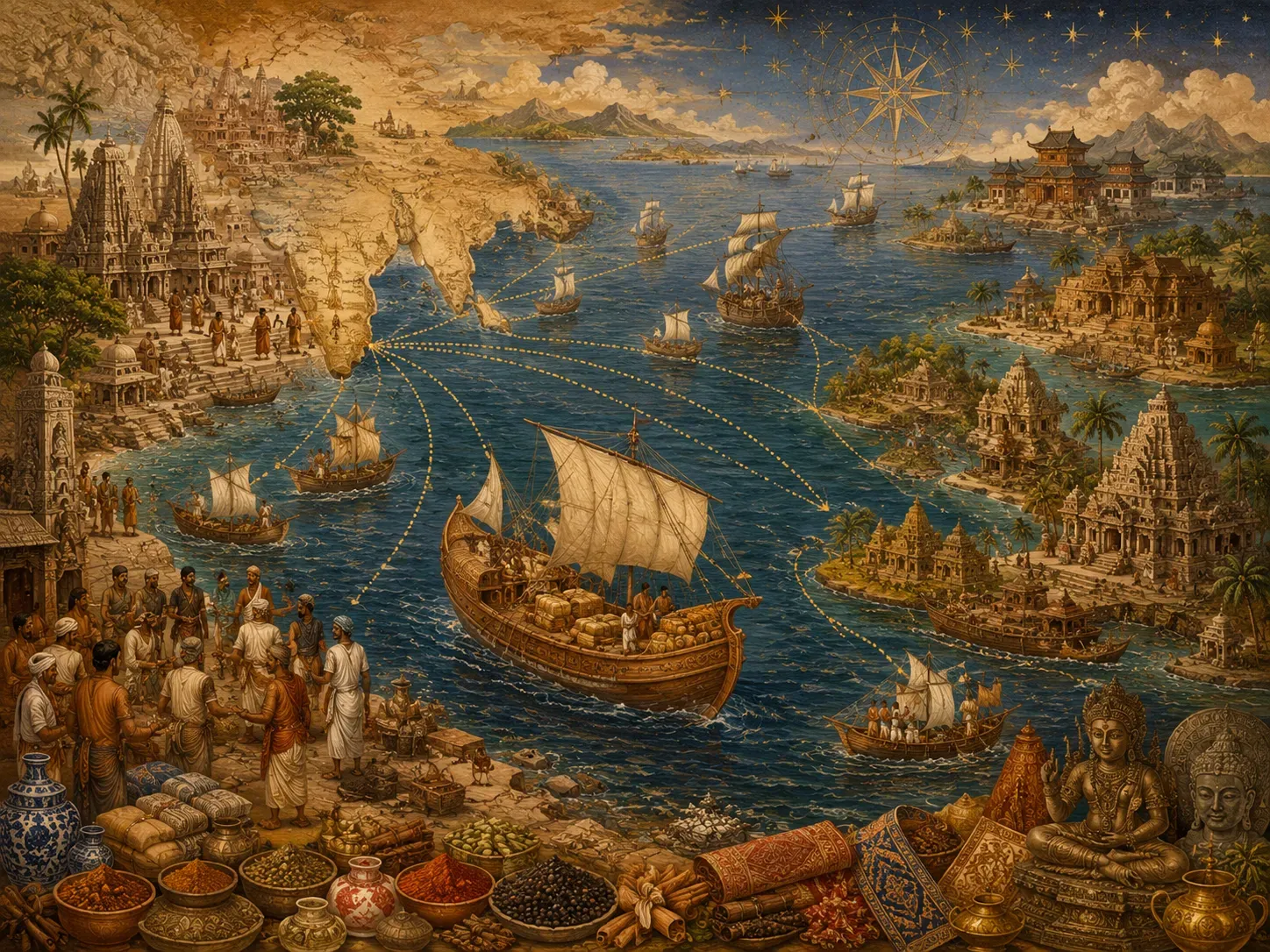
This is not a claim about modern borders. It is a description of how the tradition understood the field on which dharma was practised: Gandhāra in the northwest, Vaṅga in the east, the Tamil country in the south, and beyond — through trade, marriage, and ideas — into what classical texts called Suvarṇabhūmi and Suvarṇadvīpa (Southeast Asia).
Temples that remember मन्दिर
A short, incomplete list. Some are still in active worship; some are world-heritage ruins; all carry Sanskrit inscriptions and Indic temple architecture — outside the borders of the modern Indian state.
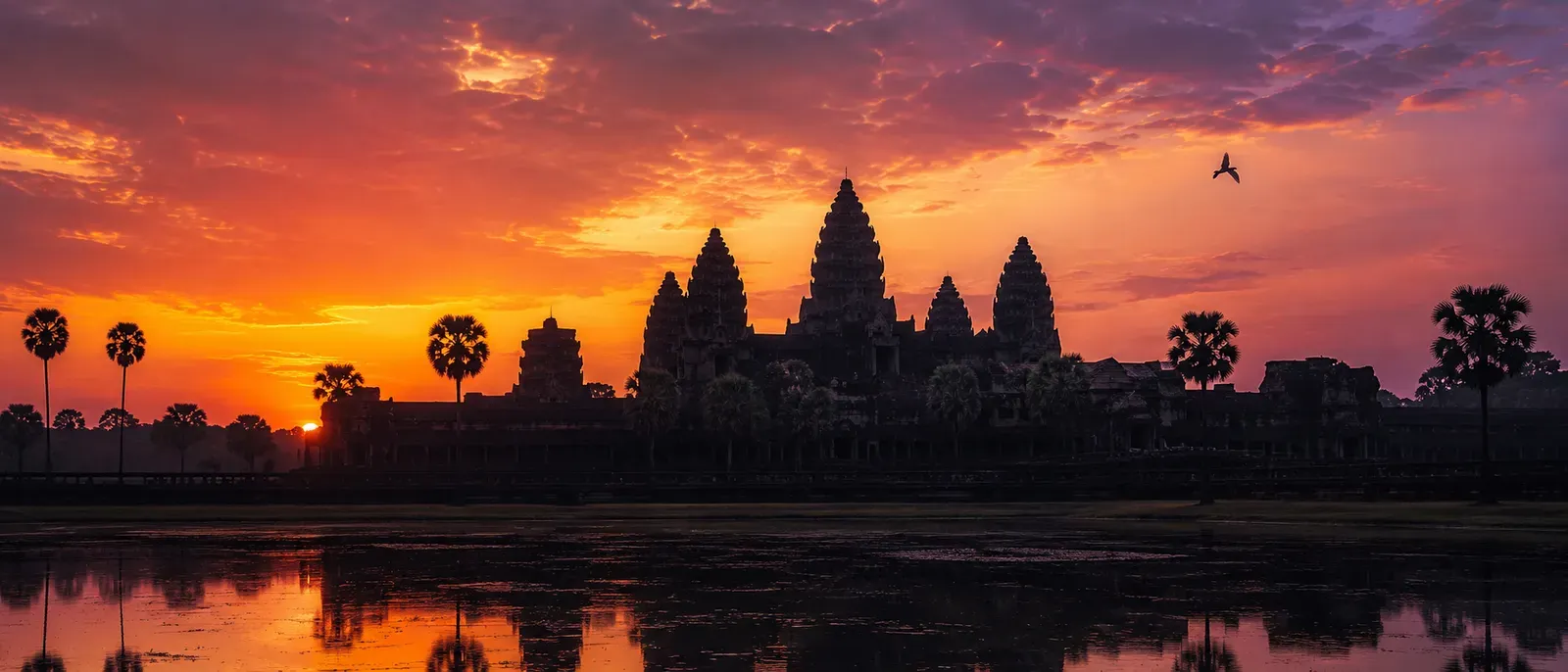
Angkor Wat
c. 1113 CECambodia · Viṣṇu (originally), then Buddhist
The largest religious monument on earth — built as a Vaiṣṇava shrine by Suryavarman II of the Khmer Empire.
Prambanan
9th century CEJava, Indonesia · Brahmā · Viṣṇu · Śiva (Trimūrti)
A trio of towering Hindu śikharas in the heart of present-day Muslim Indonesia. Still maintained.
Pashupatinath
5th century CE (current form 17th c.)Kathmandu, Nepal · Paśupati-Śiva
One of the holiest Śaiva shrines on earth, on the banks of the Bagmati.
Mukti Nath
pre-medievalMustang, Nepal · Viṣṇu (108 Divya Desam)
A Vaiṣṇava tīrtha at 3,800m, sacred to both Hindus and Buddhists.
Mā Hingulā
pre-medievalHinglaj, Balochistan (Pakistan) · Hingulā Devī — a Śakti Pīṭha
One of the 51 Śakti Pīṭhas. Yearly Hindu yātrā continues to this day.
Sītā Ashok Vatika
site venerated since antiquityNuwara Eliya, Sri Lanka · Sītā Devī
Believed in tradition to be the grove where Sītā was held during the Lankā-kāṇḍa.
My Son Sanctuary
4th–14th century CEQuảng Nam, Vietnam · Bhadreshvara-Śiva (Cham)
A Cham Śaiva sanctuary complex — Sanskrit inscriptions, Indic temple architecture in central Vietnam.
Banteay Srei
967 CECambodia · Śiva
"Citadel of women" — rose-pink sandstone, exquisitely carved Hindu mythological reliefs.
Sanskrit's reach संस्कृत
Some of these words came through Pali and Buddhist transmission, some through royal patronage, some through trade. The fact remains: half a billion people today still speak languages saturated with Sanskrit.
- Thai rāja → ราชา (raja) · agni → อัคนี · prajā → ประชา · dharma → ธรรม
- Khmer tīrtha → ទីរ្ថ · varman → វរ្ម័ន (royal name suffix) · maharāja → មហារាជា
- Bahasa Indonesia / Malay guru, ratna, putra, manusia, nāgara → negara, sūrya, candra, agama (dharma)
- Tibetan guru → གུ་རུ (often as paṇḍita), bhikṣu → དགེ་སློང, vajra → རྡོ་རྗེ (translated, but loanwords abound)
- Filipino (Tagalog) guro (teacher), diwa (consciousness), bathala (Bhaṭṭāra)
Living threads जीवन्त सूत्र
In Bali, a Hindu majority still performs the same melasti sea-purification their ancestors did a thousand years ago. In Thailand, kings have taken the regnal name Rāma through ten generations. In Cambodia, the Reamker is the Khmer Rāmāyaṇa, recited at royal ceremonies. Across Southeast Asia the gesture of greeting is still añjali-mudrā — palms joined, head slightly bowed.
These are not survivals. They are continuities — the same civilization, in slightly different dress.
सम्पादकीय रुख A note on framing
Sanatan Bhumi treats "Akhand Bharat" the way the classical texts treat it: as a description of civilizational reach, not a prescription for redrawn maps. The frame is civilizational, historical, and dharmic. Sources are cited inline. Never communal. Never inciting. The question is what was, what is, what could be — never who to attack. Where modern history has drawn lines through the old field, we acknowledge those lines and write about what predates and outlasts them.